Inventory software built for everyday operational needs
Most vending software stops at “withdraw an item.” VendTel can capture recyclable items, enforces calibration compliance, attributes cost to a job, and prevents recalled batches from entering circulation — the same software running on every SupplyPoint machine, crib, and kiosk.
Built for Depth, Configurable for Speed
VendTel includes real depth: item lifecycle and rework tracking, calibration-driven tool inspection, serialized device management, lot/batch tracking, expiration date enforcement, and more — covered in detail below.
VendTel is configurable enough to run a five-second badge-and-go withdrawal during shift change, or a fully attributed, job-costed transaction when accountability matters more than speed — the same software, tuned differently for the moment that calls for it.
Where VendTel Runs
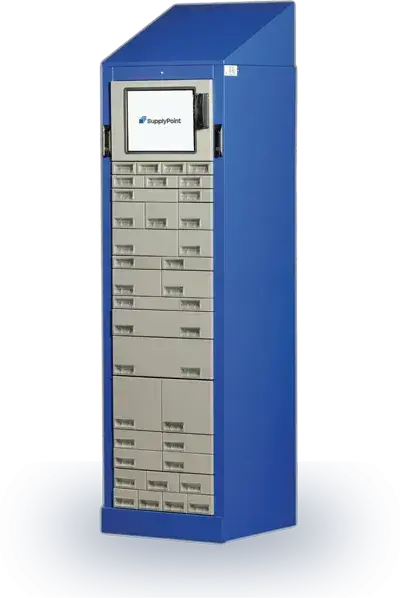
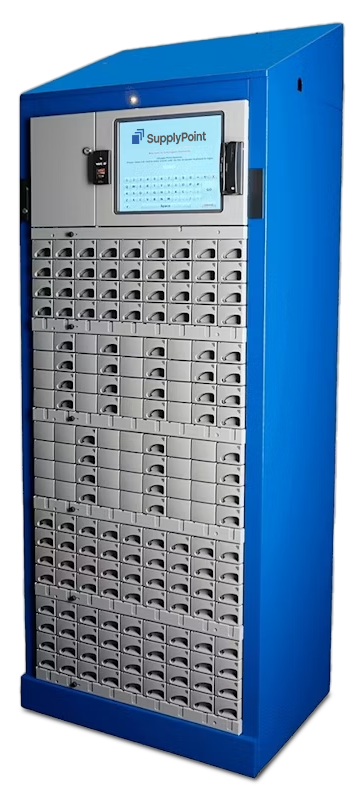
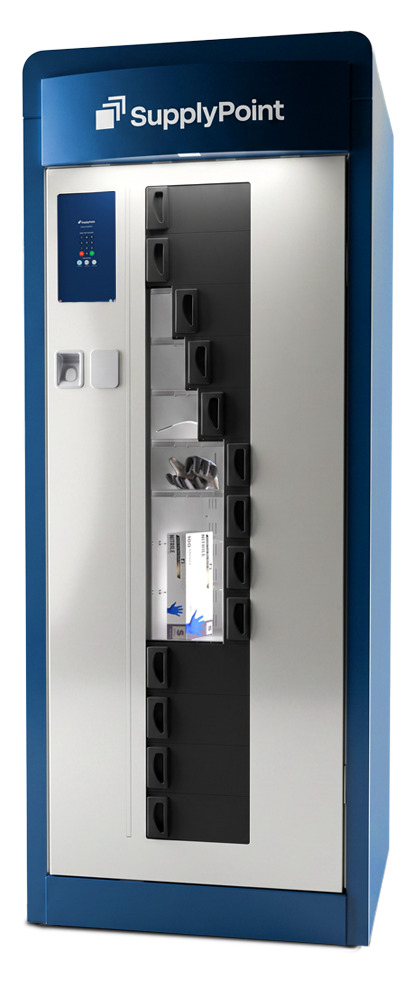
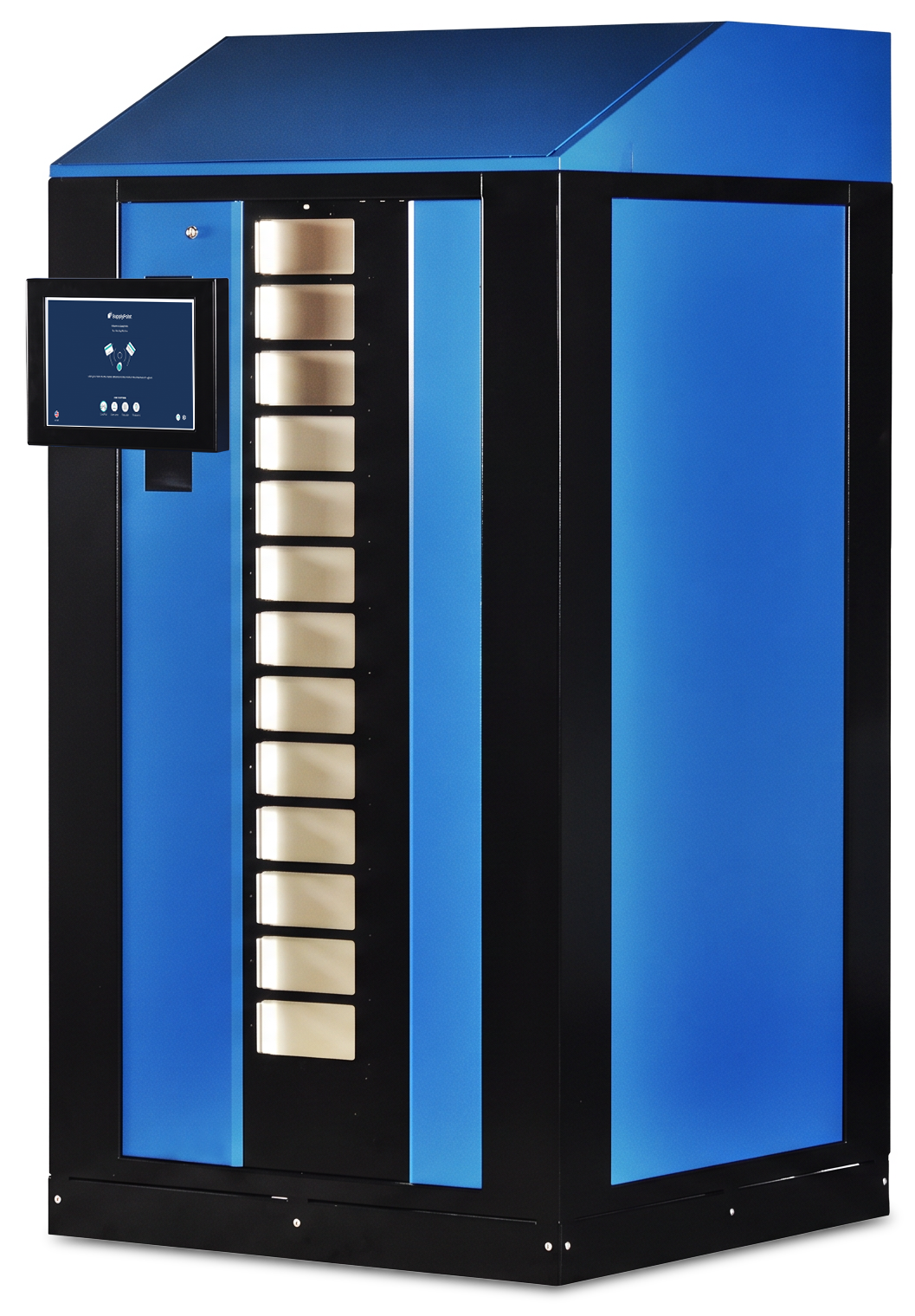
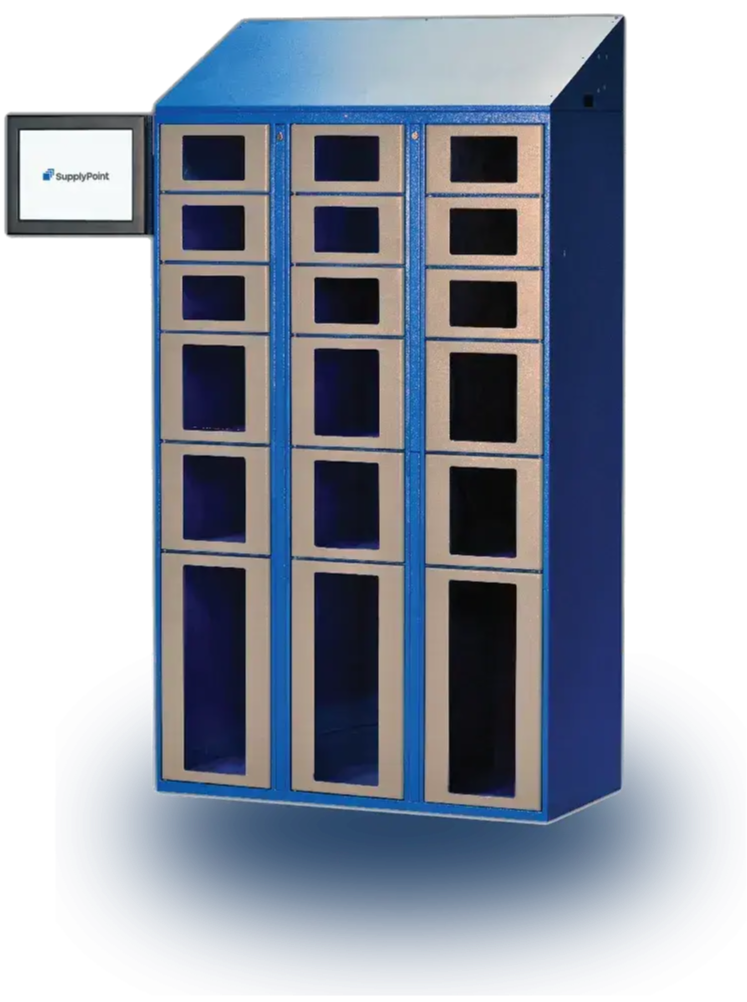
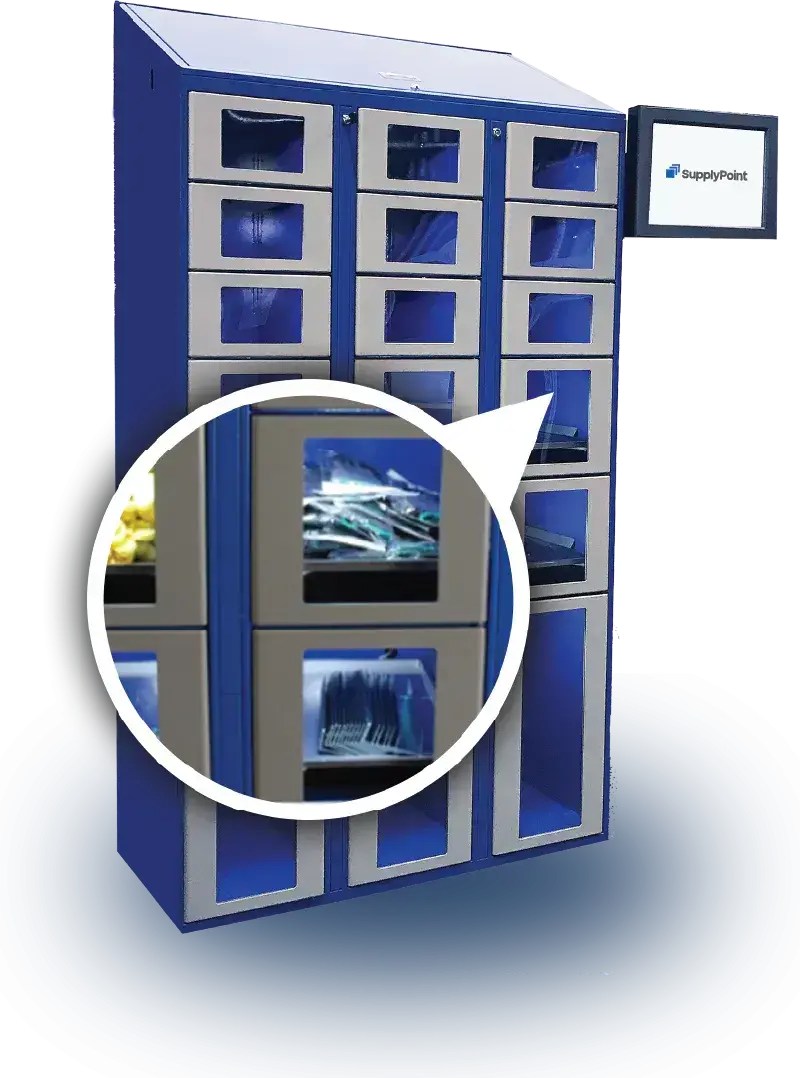
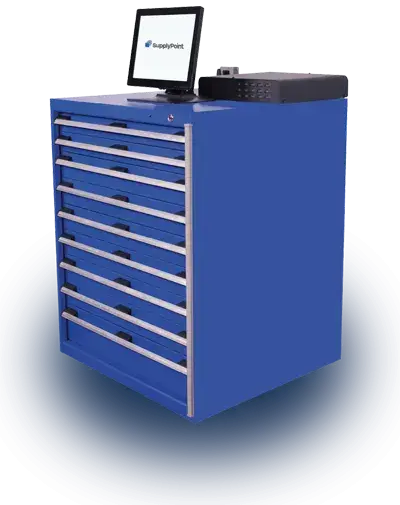
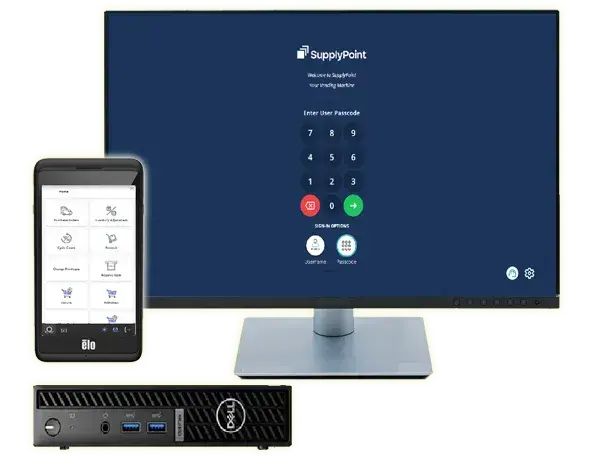
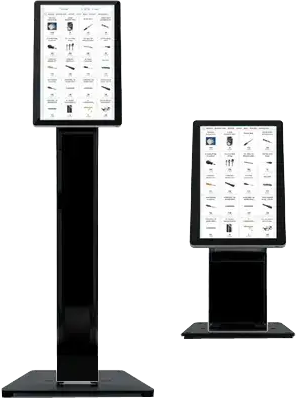
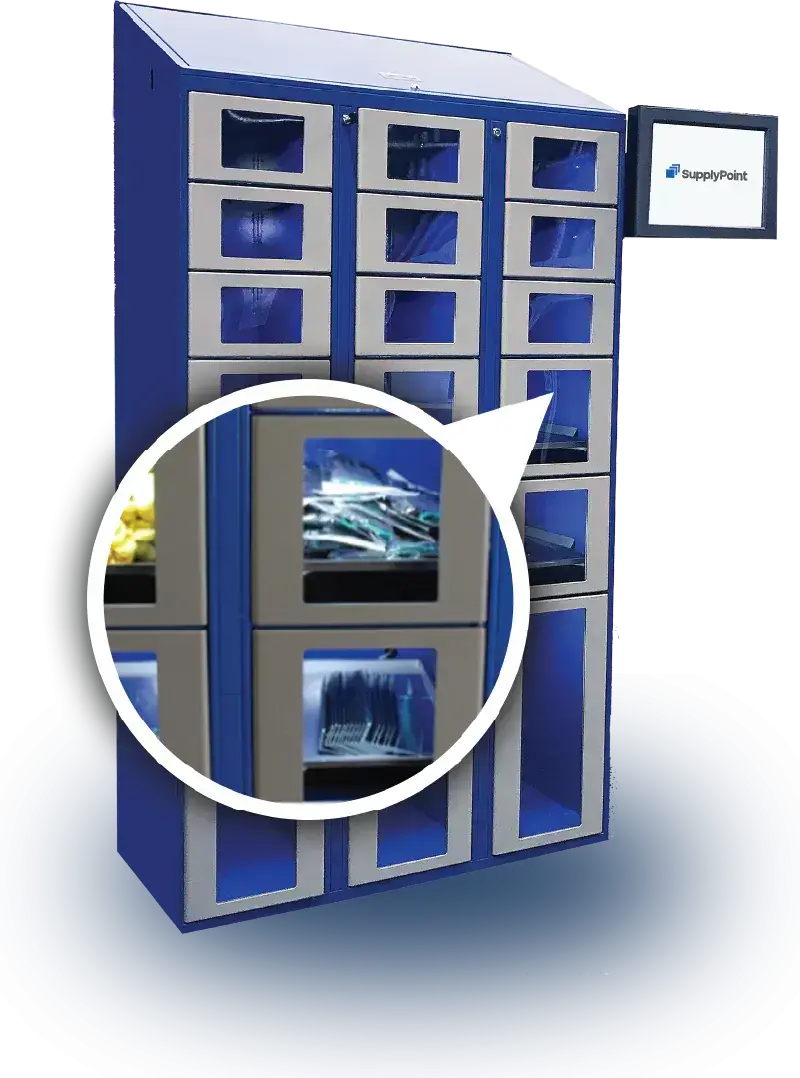
VendTel is the single interface powering every SupplyPoint hardware machine — Rotopoint, RotoFlex, 28 Level, ECTC, Modulo, Lockers, and LockerSense — as well as StoreTel and ViewPoint. One piece of software, one look and feel, wherever a user encounters it.
Supporting Capabilities
Identification & Access Control
-
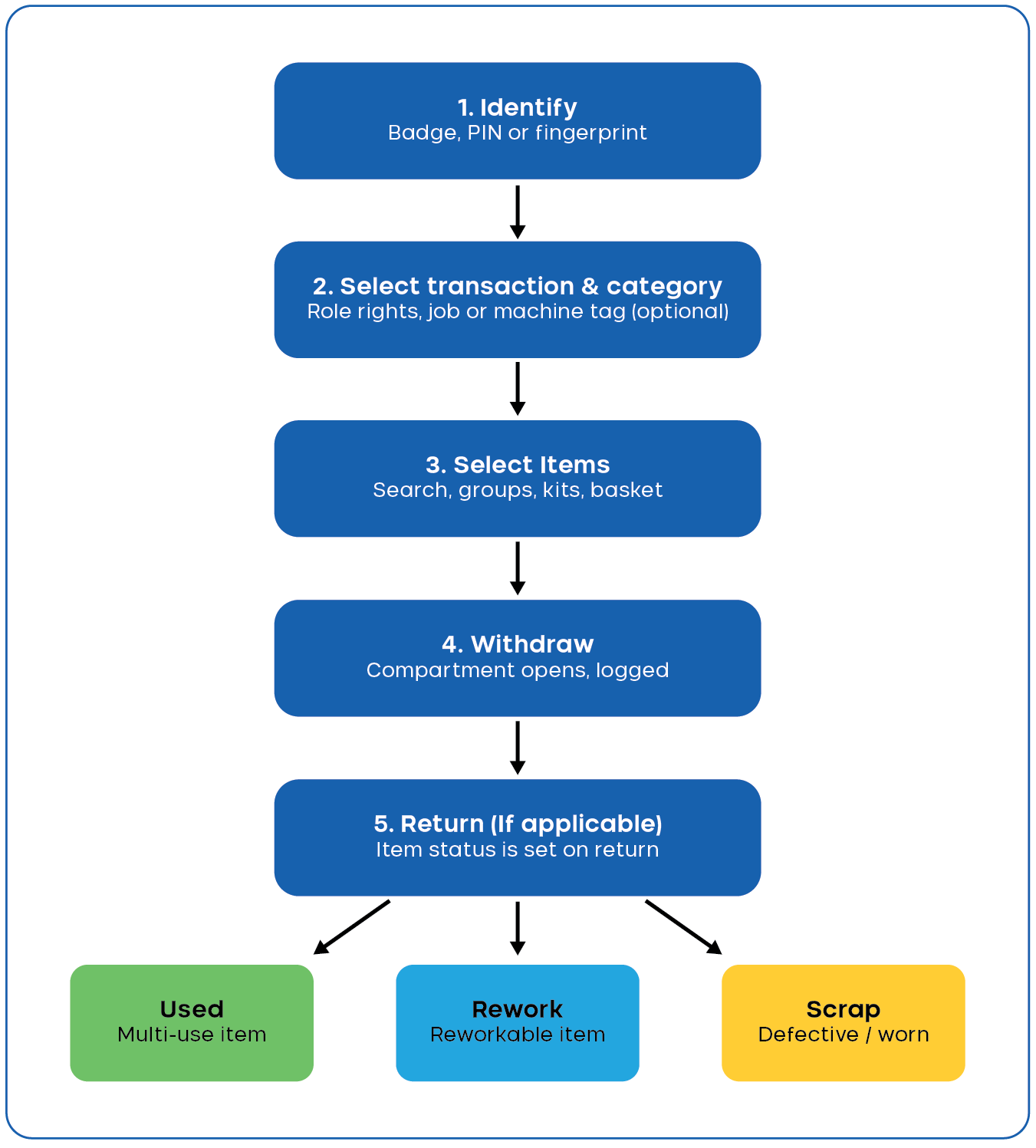
Identification via Password, Magnetic Card, RFID Fob or Fingerprint.
- Role-based transaction rights per user group (e.g. Foreman: withdraw/return/undo; Refill: restock; Worker: withdraw only)
Item Selection & Shopping Cart
- Product groups/subgroups, grid/list/table views, search, pre-defined item kits
- Shopping Cart: quick-add, review/adjust quantities, proceed to withdrawal
- Item detail display with pictures, PDFs, and quantity entry
Personalization & Localization
- Branding: logo, main color, accent color, and badge color, adjustable at any time
- Multilingual: 30+ languages plus regional localizations
Reporting & Reordering
VendTel captures every transaction and stock level at the machine and transmits it to WebSync. Reordering triggers automatically once a defined minimum stock level is reached.
Feature Snapshot
|
What it does
|
Problem it solves
|
Example industries
|
|
|---|---|---|---|
| Item Lifecycle & Rework | Tracks items through New → Used → Rework → Scrap | Capture recyclable carbide inserts on return for credit | Metalworking, automotive, aerospace |
| Tool Management | Serial tracking + inspection triggers (time/uses/units in service) | Enforce calibration compliance on gauges and measuring equipment | Quality control, aerospace, automotive |
| Device Management | Tracks serialized devices; manages charging (most-charged-first) when not in use | Solves lost or uncharged handheld devices going into the next shift | Logistics, warehousing, distribution centers |
| Rationing & Restrictions | Quantity limits and access control per user/group/time | Control PPE or consumable spend without manual policing | Manufacturing, construction, oil & gas |
| Allocations | Provides the option to add up to five layers of tracking for items withdrawn. | Attribute consumable cost to a specific job or machine | Contract manufacturing, machine shops |
| Multi-Item Compartments | Ability to assign multiple SKUs to a single compartment | Maximizes space utilization for items with lower control requirements | Warehousing, distribution, high-turnover MRO |
| Lot & Batch Management | Captures lot/batch number on restock and withdrawal | Identify and remove affected items quickly in a manufacturer recall | Metalworking (e.g. carbide insert batch recalls), broadly applicable |
| Expiration Dates | Date captured on restock (item or pack level); blocks dispensing past expiry; admin gets a retrieval report | Prevents issuing expired safety-critical items | PPE (e.g. respirator cartridges), medical, food-adjacent |
| External Stock | Tracks items held outside the machine; supports stock transfers | Extends control to equipment not physically stored in a machine | Facilities, multi-site operations |
| Point-of-Work Crib Workflows | Withdraw, restock, and more performed directly on the handheld, at the point of work in the crib | Reduces delays and transcription errors from desk-based work after the fact | Crib & storeroom environments (via StoreTel) |
| Stored Keys | Dispenses a key to allow users access to locked storage outside the machine | Extends control to equipment in unattended secured locations outside the machine | Manufacturing, oil and gas, chemical |
Feature Detail
Expand any feature for what it does, the problem it solves, and an illustrated workflow.
Item Lifecycle & Rework
WHAT IT DOES
- Items carry a "condition" — New, Used, General, Rework, or Scrap
- Return reasons captured at the point of return to Used, Rework, or Scrap
- Used-before-new — dispense used items ahead of new stock, where applicable
THE PROBLEM IT SOLVES
Consumable items that can be reworked or recycled are often thrown away by default, because there's no system tracking their return status — and no credit captured for the ones that could have gone back to a supplier.
- Example: capturing recyclable carbide inserts on return for supplier credit, instead of scrapping them by default
Where it applies: Metalworking, automotive, aerospace
Tool Management
WHAT IT DOES
- Serial number tracking for individual tools and equipment
- Inspection triggers based on maximum minutes in use, maximum uses, or maximum units produced
- Active inventory — a live list of every tool currently checked out, outside the machine
- Last withdrawal — shows which user currently has a tool withdrawn
THE PROBLEM IT SOLVES
Calibrated tools and gauges that go out of compliance without anyone noticing create quality and audit risk — especially when inspection is supposed to happen after a certain amount of use, not just on a calendar schedule.
- Example: enforcing calibration compliance on gauges and measuring equipment based on actual usage, not just time elapsed
Where it applies: Quality control, aerospace, automotive
Device Management
WHAT IT DOES
- Tracks serialized devices individually
- FIFO logic dispenses the most-charged device first
- Charges devices when they not in use
THE PROBLEM IT SOLVES
Handheld devices like scanners are easy to lose track of, and even easier to leave uncharged — which shows up as a dead device at the start of the next shift, right when it's needed.
- Example: ensuring handheld scanners are charged and ready for the next shift in a distribution center, without manual tracking
Where it applies: Logistics, warehousing, distribution centers
Rationing & Restrictions
WHAT IT DOES
- Limit the quantity of an item a user or user group can withdraw within a set time span
- Define which items a specific user or user group has access to at all
THE PROBLEM IT SOLVES
Without quantity or access limits, consumable spend has to be policed manually — after the fact, once the cost has already been incurred.
- Example: limiting PPE withdrawal to 2 pairs of gloves per user, per day, without a supervisor manually enforcing it
Where it applies: Manufacturing, construction, oil & gas
Allocations
WHAT IT DOES
- Up to 5 individually configurable categories — for example Jobs, Machines, Departments
- Fixed allocations assignable per user
- Item restrictions can be linked to specific allocations
- Reporting broken out by category
THE PROBLEM IT SOLVES
Without a way to tag a withdrawal to a job, dept, etc, consumable cost gets lumped into a single overhead line instead of being attributed to what actually drove it. These fields are optional and set by administrators — every additional required field adds a step to the transaction, and in high-volume moments like shift change, that can create queues at the machine. VendTel lets an organization dial categorization up or down per site, per user group, or even per shift.
Where it applies: Contract manufacturing, machine shops
Multi-Item Compartments
WHAT IT DOES
- Mulitiple SKUs supported in one compartment (eg Locker door/Modulo drawer)
- Several different items can be stored in one compartment; the user indicates how many they're withdrawing, with a prompt to confirm the remaining quantity
THE PROBLEM IT SOLVES
Where space may be a constraint or item control requirements are low, the ability to support multiple SKUs in one compartment maximizes available space.
Where it applies: Manufacturing job shops, Crib & storeroom environments
Lot & Batch Management
WHAT IT DOES
- Captures the lot or batch number an item is associated with, at time of transaction
THE PROBLEM IT SOLVES
When a manufacturer issues a recall on a specific lot or batch, an end-user or distributor needs to identify exactly which items in circulation are affected and remove them — without lot tracking, that's a manual, error-prone search.
- Example: a carbide insert manufacturer recalls specific lot numbers due to a metallurgical defect risk (e.g. premature chipping); lot tracking lets an operation immediately identify and pull the affected inserts
Where it applies: Metalworking (e.g. carbide insert batch recalls); broadly applicable across industries with lot-tracked consumables
Expiration Dates
WHAT IT DOES
- Expiration date captured at restock, on an item or pack basis
- VendTel blocks dispensing once the date has passed
- Administrators can pull a report of expired items for physical retrieval
THE PROBLEM IT SOLVES
Safety-critical items with a shelf life can end up in service past their expiration date if there's no system actively blocking that dispense — a paper-based or manual process relies on someone remembering to check.
- Example: a respirator with a replaceable cannister that has an expiration date — VendTel won't dispense it once expired, and flags it for retrieval
Where it applies: PPE (e.g. respirator cartridges), medical, food-adjacent
External Stock
WHAT IT DOES
- Create and track stock locations outside the machine itself
- Assign items to those external locations
- Transfer stock between locations or machines directly within the software
- Built-in tool to generate barcode labels based on item number
THE PROBLEM IT SOLVES
Not every item an organization needs to control can be placed in a machine — equipment stored elsewhere falls outside a system that only tracks what's physically dispensed.
Where it applies: Facilities, multi-site operations
Point-of-Work Crib Workflows
WHAT IT DOES
- Common crib transactions — withdraw, restock, and more — can be performed directly on the handheld, at the point of work in the crib, not just at the desk-based workstation
- Example: a full receiving/put-away workflow — scan the part number on an incoming order, select the matching purchase order, identify the packing list if applicable, then restock/put away the item, all without returning to the workstation
THE PROBLEM IT SOLVES
Tying crib transactions to a single desk-based workstation forces attendants to either walk back and forth or do the work from memory after the fact — introducing delays and errors that don't exist when the transaction happens exactly where the item is being handled.
Where it applies: Crib & storeroom environments (via StoreTel)
Stored Keys
WHAT IT DOES
- Manage items that are stored in an external locked location
- Users (with appropriate permissions) select the item and the compartment with the key opens
THE PROBLEM IT SOLVES
Items that are not suitable for storing/managing in a machine (eg; chemicals, hazardous items, liquids etc) can still be controlled and inventoried
Where it applies: Oil and gas, chemical, manufacturing
Related Solutions & Products
24/7 cloud portal. Configure machines, view reports, trigger reorders — from anywhere.
Total Inventory Control
Ready to see VendTel in Action?
Request a demo or find an authorised SupplyPoint distributor near you.